
News & Media
Historic AFSA-SADC Alliance signing transforms arbitration taking Africa's rightful place on the world stage
Tuesday, 9 April 2024
Over 400 local, African and International delegates gathered at the Sandton Convention Centre on Tuesday 9th April 2024 for the inaugural Arbitration Foundation of Southern Africa’s (AFSA’s) Johannesburg Arbitration Week (JAW), to network, debate and hear 95 speakers covering 9 themes over 3 days with 12 co-hosts, 7 sponsors and over 25 supporting organisations. The theme for Day 1 of the conference was ‘From Africa There Is Always Something New’.
The aim of JAW 2024 is to unpack the issues and challenges in the fast-changing world of international commercial arbitration. JAW pays particular attention to the key initiatives which are shaping and transforming dispute resolution in Africa. JAW is co-hosted by leading solicitor firms, bars and other stakeholders who are all founding members of AFSA.
Following on from the opening performance by the Memeza Choir and both South African national anthem as well as the SADC anthem, Lindi Nkosi -Thomas SC welcomed delegates and introduced Deputy Minister of Justice and Constitutional Development, John Jeffery who provided the opening remarks in which he stated, “An efficient arbitration regime makes good economic sense for any country”. He went on to state that JAW 2024 provides the opportunity for further discussion on a shared BRICS arbitration centre.”
This was followed by the conference keynote address presented by Justice Dikgang Moseneke who discussed the importance of all of the key players in the arbitration ecosystem including government, the courts, the legal profession, and the business community stating, “the arbitral ecosystem will not operate without the support of each of these communities”. In discussing the signing of the AFSA-SADC Alliance Charter, he said, “Members of the alliance will provide an international arbitration alliance building the bridge between legal communities across the SADC region.”
During theAFSA-SADC Alliance: a regional game changer session, ProgrammeDirector,Paulman Chungu introduced Part 1of the first plenary session that focused on ‘Objectives, Purpose, and Expectations’ and includedan impressive line-up of speakers: Michael Kuper SC – Chairman of AFSA and CAJAC; Mr Flavio Menete – President of the SADC Lawyers’ Association; Honourable Titus Mvalo – Malawi Minister of Justice; Hon. Nobert Mazungunye – Zimbabwe Deputy Minister of Justice; and Hon. John Jeffrey – SA Deputy Minister of Justice.
All of the speakers shared their impassioned support for the signing of the charter with Michael Kuper SC – Chairman of AFSA and CAJAC stating, “The signing of the AFSA-SADC Alliance will transform arbitration practice in the 16 member states of SADC and will have a huge effect on the way all practice arbitration taking our rightful place in the world of arbitration – it is one of the biggest arbitration initiatives in the international field of arbitration when taking into account that the population of SADC is larger than the population of the USA.”
Part 2of the plenary session focused on the SADC Charter: adoption and signature with signatories including:
Angola:José Luís Domingos – President Ordem Dos Advogados De Angola
Botswana: Osego Garebamono – President Law Society of Botswana
Lesotho: Lintle Tuke – President Lesotho Law Society
Malawi: Patrick Gray Mpaka – President Malawi Law Society
Mozambique: Carlos Martins – President OAM
Namibia: Clive L Kavendjii – President Namibia Law Society
Tanzania: Dr R. Rugemeleza Nshala – President Tanganyika Law Society
Zambia: Lungisani Zulu – President Law Association of Zambia
Zimbabwe: Rumbidzai Matambo – President Law Society of Zimbabwe
Mozambique: Flavio Menete – President SADCLA
Arbitration Foundation of Southern Africa: Michael Kuper SC – Chairman of AFSA
AFSA SADC Division: Des Williams – Chairman of AFSA-SADC Division
AFSA International: Patrick Lane SC – Chairman of AFSA International Division
Eswatini: Mr Magagula – President Law Society of Swaziland and Tanganyika President of Law Society were absent for the signing but are fully committed to the charter and will sign at a later date.
Part 3of the plenary focused on “Securing the Charter Objectives” with speakers that included: Des Williams – Chairman of AFSA-SADC Division; Patrick Lane SC – Chairman of AFSA International; Stanley Nyamanhindi – CEO of AFSA-SADC Division; and Prof Lise Bosman.
Following on from this a number of the conference co-hosts hosted panel discussions starting with Webber Wentzel’s panel discussion entitled ‘African Continental Free Trade Area: the role of dispute resolution in African trade and investment’ moderated by Erin Warmingon with panellists: Judge David Unterhalter; Vlad Movshovich; Meluleki Nzimande; and Johann Human.
Bowmans hosted a panel discussion focused on ‘Africanisation of Arbitration: perspectives from practitioners, counsel and arbitrators’ moderated byJonathan Barnes with speakers: Jawaid Babamia; Cecil Kuyo; Festus Onyia; and Natasha Peter.
Allen & Overy’s panel discussion was on ‘Challenges, Strategies and Practical Considerations: enforcement in the African context’ moderated byWihan Meintjes with panellists: Abdul Jinadu; Yacine Francis; Dan Tivadar; and Gerhard Rudolph.
The final, and one of the most interesting, sessions of the day hosted by Young AFSA introduced ‘The Case of the Heavenly Twins:The Moot, the Man and the Machine’ in which a panel of arbitrators including: Patrick Lane SC; Malcolm Wallis; Fuyong Chen; James Banda; Susan Mutangadura; and Leyou Tameru heard arguments from 3 teams of lawyers. Following the arguments by the 3 teams the matter will also be adjudicated utilising Artificial Intelligence (AI) provided by the University of Pretoria with both awards being presented to the delegates at the conference, who will all cast their votes as to whether Man or Machine presented the best award. The results of this will be revealed on the last day of the conference.
Chief Justice Raymond Zondo addresses AFSA JAW conference - praising the signing of the AFSA-SADC alliance charter
Wednesday, 10 April 2024
Speaking at the gala dinner event held on Day 2 of the Arbitration Foundation of Southern Africa’s (AFSA’s) inaugural Johannesburg Arbitration Week (JAW), in welcoming Chief Justice Zondo, Michael Kuper SC, Chairman of AFSA stated, “It gives me great honour to introduce the man who the history of our country will regard as an icon of South Africa.”
In presenting the keynote address, Chief Justice Raymond Zondo stated, “Arbitration is shaped and strengthened by a rich and varied jurisprudence, which has been founded on the principles of respect found in the region’s culture of Ubuntu. The signing of the AFSA – SADC Alliance Charter is wonderful and reflects our shared African Arbitration culture”. He went on to state, “Let the region take its rightful place in the practice of arbitration to the benefit of the entire Southern African region”.
The event hosted by AFSA was attended by dignitaries from across Africa and the world included the Hon. Titus Mvalo, Minister of Justice Malawi; Minister of Justice Lesotho, Hon. Richard Ramoeletsi; Deputy Minister of Justice Zimbabwe, Hon. Nobert Mazungunye; Hon. Advocate Rapelang Motsieloa, Attorney General Lesotho; Flavio Menete, SADC Lawyers Association President; Santhaan Krishnan, Commonwealth Lawyer’s Association; Janine Myburgh, LPC Chair South Africa; Stanley Nyamanhindi, CEO SADCLA; and James Banda, SADCLA Past President.
Over 400 local, African and International delegates gathered at the Sandton Convention Centre from Tuesday 9th April 2024 for the inaugural Arbitration Foundation of Southern Africa’s (AFSA’s) Johannesburg Arbitration Week (JAW), to network, debate and hear 95 speakers covering 9 themes over 3 days with 12 co-hosts, 7 sponsors and over 25 supporting organisations.
The theme for Day 2 was ‘Old Problems New Challenges’ with Pinsent Masons kicking off with ‘Arbitration as an Enabler for the African Energy Transition: from fossil fuel to renewable power’ moderated by Thethe Mokele with speakers: Dr Wikus Kruger; Thomas King; and Emma Roberts. This was followed by KPMG’s session focused on ‘Technology into the Future: from tape recording to arbitrator – how will technology shape arbitration?’ moderated by Déan Friedman and Rupesh Vashist.
Allen & Overy’s session focused on ‘The future of Investment Protection in the SADC region: domestic courts, regional forums or international arbitration?’ moderated byMichelle Porter-Wright with panellists: Prof Lise Bosman; Mmiselo Qumba; Xolelwa (Mtumbi) Mlumbi-Peter; and Svetlana Vasileva.Webber Wentzel’s panel discussion ‘International Treaty Arbitration:ISDS and associated reforms, from a continental perspective’ was moderated by Nick Alp with panellists: Toby Landau KC; Matthew Weiniger KC; Sarah McKenzie; and Dr Fola Adeleke.
Herbert Smith Freehills’ session ‘ESG: fertile ground for disputes?’ moderated by Fiorella Noriega Del Valle included speakers: Michael Schottler; Andrew Cannon; and Dr Patricia Nacimiento.
During 39 Essex Chamber’s session on ‘Integrity in International Arbitration’, moderator: Edwin Glasgow CBE KC was joined by speakers: Justice Nageswara Rao; Vivek Kapoor; Peter Ashford; Patrick Lane SC; and Svetlana Vasileva.
In CDH’s session, ‘Looking at international disputes in an evolving legal environment: are African lawyers prepared?’ The panel moderated by Clive Rumsey, discussed relevant industries in which Africa will play a critical role, the inevitable disputes that will develop and how those disputes can best be resolved, with panellist: Khaya Mantengu and speakers: Jacqueline Waihenya; Veronica Connolly; and Kimlynne Olivier.
Herbert Smith Freehills’ session, ‘How Helpful are Experts in Arbitration?’ consisted of speakers: Adv Azhar Bham SC; Prof David Butler; Hannah Ambrose; Laurence Franc-Menget; and Mike McClure KC.
KPMG’s session ‘Charted Accountant: expert, expert in a dispute, or arbitrator?’ moderated by Déan Friedman included panellists: Susan Breytenbach; Louise Jordaan; and Huns Biltoo.
Pinsent Masons’ session on ‘Arbitration and Mining in Africa: managing commercial and political risks.’ Was moderated by Jason Smit with speakers: Mark Thomas; Graham Coop; Margo Werner; and Nanri Labuschagne.
In the final sessions for the day, General Council of the Bar South Africa discussed ‘Arbitrations an Unwitting Facilitator of Corruption in Government?’ with moderator: Adv. Seleka SC alongside panellists: Adv. Gerhard Cilliers SC; Adv. Chohan SC; and Adv. Greta Engelbrecht SC. While Advocates Group 621’s session on ‘Arbitration in Niche Areas: business rescue, intellectual property, and corporate governance.’ moderated by Jason Mitchell consisted of speakers: Arnold Subel SC; Bongani Manentsa; Christiaan Bester Panellists: Mmusi Seape ; Mpho Sethaba; and Makhotso Lengane.
AFSA JAW 2024 - The Silk Road and The BRCIS Road - global ramifications
Thursday, 11 April 2024
The first session on Day 3 of the conference focused on AFSA’s journey to becoming an international player in arbitration. The creation of the China-Africa Joint Arbitration Centre (CAJAC) played a significant role and the current development of the BRICS initiative with AFSA broadening international horizons places Southern African arbitration firmly on the world stage.
Michael Kuper SC, Chairman of AFSA in discussing AFSA’s relationship with CAJAC stated, “In developing our relationship the Chinese offered a handshake from across the world, impressing us with their goodwill, efficiency and their commitment to building the relationship between our Chinese partners and our African partners leading to growth from an international perspective.”
In his opening remarks Prof David Butler, Professor Emeritus and Research Fellow, Stellenbosch University, stated, “Michael Kuper SC is the father of administered arbitration in this country and without his vision and determination AFSA would not have been in the important place that it finds itself today bringing arbitration in Africa onto the world stage.”
Lindi Nkosi-Thomas SC, AFSA Vice-Chair in discussing progress with the BRICS initiative stated, “The CAJAC rules are being adopted by the BRICS legal centres and are being adapted for the BRICS initiative.”
Dr Dorean Du, Shanhai International Arbitration Centre, closed the session on ‘SHIAC: the first BRICS Centre’, introducing the exploration and practices of the BRICS Shanghai International Economic and Trade Arbitration Commission (SHIAC) that has representatives from all of the BRICS countries.
The CDH session on ‘Unpacking BRICS December 2023 Resolution: from an investment and trade perspective’ moderated by Jackwell Feris, included panellists: Seamus Duggan; Leyou Tameru; Prashant Kumar; and Anil Sooklal.
AFSA International’s session discussing ‘Overcoming Obstacles in Arbitration:appointment challenges, CMC procedures, and the future role of AI in global justice’ moderated by Svetlana Vasileva consisted of Bruce Collins KC speaking on the ‘Challenges to the Appointment of Arbitrators’, Dr Niels Schiersing, discussing ‘CMC and the PO1’,and Jean-Rémi de Maistre on ‘AI Powering Arbitration and Global Justice.’
In Bowmans ‘Unpacking the Investment Protocol of AfCTA’ moderator John Kawana was joined by speakers Clement Mkiva; Dr Wilbert Kapinga; Erin Cronjé; and Leyou Tameru.
During Advocates Group 621’s session ‘Mediation:finding real solutions that bind’ moderator Svetlana Vasilena was joined by speakers: John Bishop; R. Santhanakrishnan; and Ofentse Motlhasedi.
GCB’s session, ‘But is it Constitutional? The legality defence and arbitration’ was moderated by Professor Currie and consisted of panellists: Adv Gautschi SC; Judge Adams; and Judge Malindi.
AFSA’s concluding session which closed the final day was moderated by Lindi Nkosi-Thomas SC Young AFSA announced …. as winner of “Who Won, Man or Machine?”
Patrick Lance SC announced … as the Moot Winning Team. Moderator Lindi Nkosi delivered a message of support and discussed projects going forward. Michael Kuper SC closed with final thoughts and farewell.
Over 400 local, African and International delegates gathered at the Sandton Convention Centre for the inaugural Arbitration Foundation of Southern Africa’s (AFSA’s) Johannesburg Arbitration Week (JAW), to network, debate and hear 95 speakers covering 9 themes over 3 days with 12 co-hosts, 7 sponsors and over 25 supporting organisations.
Inaugural AFSA Johannesburg Arbitration Week sees 12 SADC Countries Signing Alliance
Wednesday, 17 April 2024
Close to 500 local, African and International delegates gathered at the Sandton Convention Centre from the 9th to the 11th April 2024 for the inaugural Arbitration Foundation of Southern Africa’s (AFSA’s) Johannesburg Arbitration Week (JAW), to network, debate and hear over 100 speakers covering 9 themes over 3 days with 12 co-hosts, 7 sponsors and over 25 supporting organisations.
The aim of JAW 2024 was to unpack the issues and challenges in the fast-changing world of international commercial arbitration. The theme for Day 1 of the conference was ‘From Africa There Is Always Something New’. Deputy Minister of Justice and Constitutional Development, John Jeffery provided the opening remarks in which he stated, “An efficient arbitration regime makes good economic sense for any country”. He went on to state that JAW 2024 provides the opportunity for further discussion on a shared BRICS arbitration centre.”
The conference keynote address was presented by Justice Dikgang Moseneke who discussed the importance of all of the key players in the arbitration ecosystem including government, the courts, the legal profession, and the business community stating, “the arbitral ecosystem will not operate without the support of each of these communities”. In discussing the signing of the AFSA-SADC Alliance Charter, he said, “Members of the alliance will provide an international arbitration alliance building the bridge between legal communities across the SADC region.”
In presenting the keynote address at the event’s gala dinner, Chief Justice Raymond Zondo stated, “Arbitration is shaped and strengthened by a rich and varied jurisprudence, which has been founded on the principles of respect found in the region’s culture of Ubuntu. The signing of the AFSA – SADC Alliance Charter is wonderful and reflects our shared African Arbitration culture”. He went on to state, “Let the region take its rightful place in the practice of arbitration to the benefit of the entire Southern African region”.
The event hosted by AFSA was attended by dignitaries from across Africa and the world included the Hon. Titus Mvalo, Minister of Justice Malawi; Minister of Justice Lesotho, Hon. Richard Ramoeletsi; Deputy Minister of Justice Zimbabwe, Hon. Nobert Mazungunye; Hon. Advocate Rapelang Motsieloa, Attorney General Lesotho; Flavio Menete, SADC Lawyers Association President; Santhaan Krishnan, Commonwealth Lawyer’s Association; Janine Myburgh, LPC Chair South Africa; Stanley Nyamanhindi, CEO SADCLA; and James Banda, SADCLA Past President.
During the 1st session on Day 1 ‘AFSA-SADC Alliance: a regional game changer session’, the first part focused on ‘Objectives, Purpose, and Expectations’ and includedan impressive line-up of speakers: Michael Kuper SC – Chairman of AFSA and CAJAC; Mr Flavio Menete – President of the SADC Lawyers’ Association; Honourable Titus Mvalo – Malawi Minister of Justice; Hon. Nobert Mazungunye – Zimbabwe Deputy Minister of Justice; and Hon. John Jeffrey – SA Deputy Minister of Justice. All of the speakers shared their impassioned support for the signing of the charter with Michael Kuper SC – Chairman of AFSA and CAJAC stating, “The signing of the AFSA-SADC Alliance will transform arbitration practice in the 16 member states of SADC and will have a huge effect on the way our Alliance members will practice arbitration taking our rightful place in the world of arbitration – it is one of the biggest arbitration initiatives in the international field of arbitration when taking into account that the population of SADC is larger than the population of the USA.”
Part 2 focused on the SADC Charter: adoption and signature with signatories including:
Angola:José Luís Domingos – President Ordem Dos Advogados De Angola
Botswana: Osego Garebamono – President Law Society of Botswana
Lesotho: Lintle Tuke – President Lesotho Law Society
Malawi: Patrick Gray Mpaka – President Malawi Law Society
Mozambique: Carlos Martins – President OAM
Namibia: Clive L Kavendjii – President Namibia Law Society
South Africa: Janine Myburgh – LPC Chair
Tanzania: Dr R. Rugemeleza Nshala – President Tanganyika Law Society
Zambia: Lungisani Zulu – President Law Association of Zambia
Zimbabwe: Rumbidzai Matambo – President Law Society of Zimbabwe
Mozambique: Flavio Menete – President SADCLA
Arbitration Foundation of Southern Africa: Michael Kuper SC – Chairman of AFSA
AFSA SADC Division: Des Williams – Chairman of AFSA-SADC Division
AFSA International: Patrick Lane SC – Chairman of AFSA International DivisionEswatini: Mr Magagula – President Law Society of Swaziland and Tanganyika President of Law Society were absent for the signing but are fully committed to the charter and will sign at a later date.
The final session of the day hosted by Young AFSA introduced ‘The Case of the Heavenly Twins:The Moot, the Man and the Machine’ in which a panel of AFSA International Arbitrators including: Patrick Lane SC; Malcolm Wallis; Dr Fuyong Chen; James Banda; Susan Mutangadura; and Leyou Tameru heard arguments from 3 teams of lawyers. Following the arguments by the 3 teams the matter was also adjudicated utilising Artificial Intelligence (AI) provided by the University of Pretoria with both awards being presented to the delegates at the conference, who cast their votes as to whether Man or Machine presented the best award. The results revealed on the last day of the conference found that ‘Man’ is still superior to ‘Machine’.
The theme for Day 2 was ‘Old Problems New Challenges’ included panels discussions and an impressive array of speakers speakers presented by Pinsent Masons ,KPMG,Allen & Overy; Webber Wentzel, Herbert Smith Freehills,39 Essex Chamber, CDH, the General Council of the Bar South Africa, and Advocates Group 621.
The theme for Day 3 was ‘The Silk Road and the BRICS Road – Global Ramiifications’ with the first session focused on AFSA’s journey to becoming an international player in arbitration. The creation of the China-Africa Joint Arbitration Centre (CAJAC) played a significant role and the current development of the BRICS initiative with AFSA broadening international horizons places Southern African arbitration firmly on the world stage. In his opening remarks Prof David Butler, Professor Emeritus and Research Fellow, Stellenbosch University, stated, “Michael Kuper SC is the father of administered arbitration in this country and without his vision and determination AFSA would not have been in the important place that it finds itself today bringing arbitration in Africa onto the world stage.” This was followed by presentations from Lindi Nkosi-Thomas SC, AFSA Vice-Chair and Dr Dorean Du, Shanghai International Arbitration Centre.Further presentations were presented by CDH, AFSA International’, Bowmans, Advocates Group 621, and GCB.
Media
Lusaka International Arbitration Centre
Official Opening
Sharing of Arbitrators
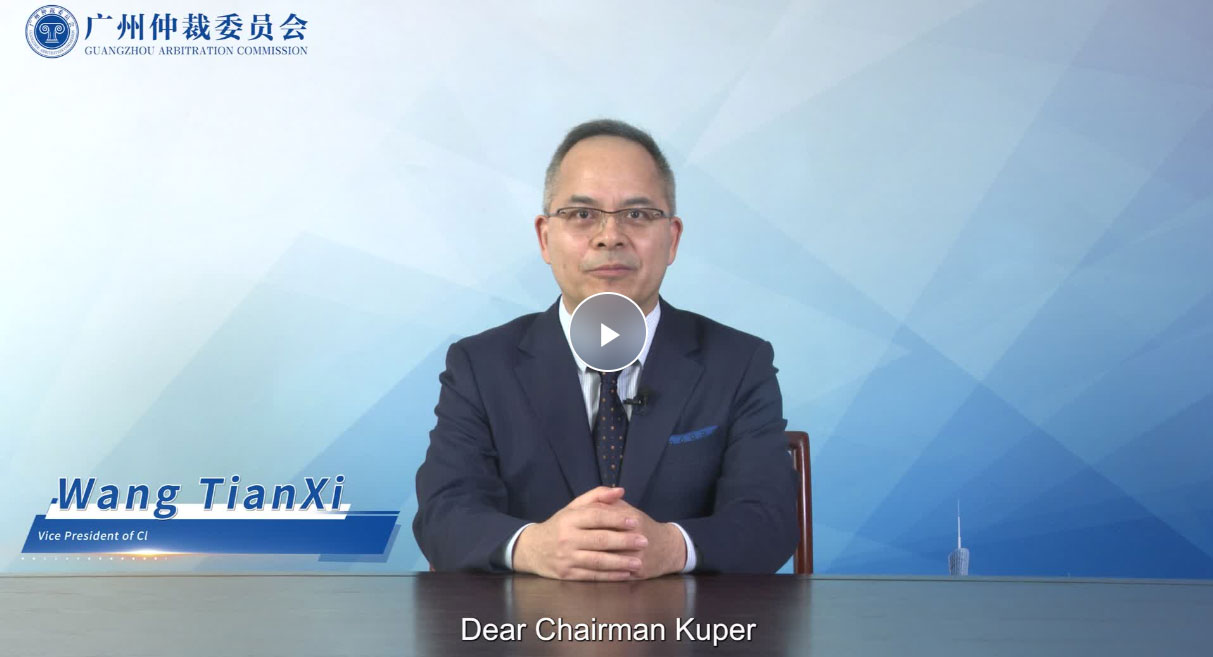
From: Guangzhou Arbitration Commission (GZAC)
General enquiries
+27 11 320 0600
+27 11 320 0533
1st Floor, Grindrod Tower, 8a Protea Place, Sandton
COPYRIGHT © 2024 JOHANNESBURG ARBITRATION WEEK.